








Invoicing Under GST
GST Invoice: Legal Requirements, Format, and Consequences of Non-Issuance (2026 Guide)
Introduction
A GST invoice is not just a billing document—it is a legal proof of transaction, a compliance requirement, and the foundation for Input Tax Credit (ITC) under GST.
Incorrect or missing invoices can lead to:
- Denial of ITC
- Heavy penalties
- Legal complications
In this guide, you will learn everything about GST invoice rules, format, legal requirements, and penalties, along with expert insights beyond standard articles.
What is a GST Invoice?
A GST invoice (also called a tax invoice) is a document issued by a registered supplier for goods or services provided. It contains complete transaction details including tax components.
👉 It acts as:
- Proof of supply
- Basis for ITC claim
- Record for GST compliance
A GST invoice consolidates details like goods/services supplied, tax amount, and total payable value.
Legal Requirements of GST Invoice (Under CGST Act)
Under GST law, issuing a proper invoice is mandatory for all registered businesses.
✅ Who Must Issue GST Invoice?
- Every GST-registered supplier
- For every taxable supply of goods or services
- Required for both B2B and B2C transactions
📅 Time Limit for Issuing GST Invoice
| Type | Time Limit |
|---|---|
| Goods | Before or at the time of removal/delivery |
| Services | Within 30 days of service supply |
👉 This is crucial because it determines the “time of supply” (tax liability point).
Mandatory Fields in GST Invoice Format
A valid GST invoice must include the following details:
📌 Basic Details
- Invoice number (unique & consecutive)
- Invoice date
📌 Supplier Details
- Name, address, GSTIN
📌 Recipient Details
- Name, address, GSTIN (if registered)
📌 Transaction Details
- Place of supply
- HSN/SAC code
- Description of goods/services
- Quantity & unit
- Total value
- Taxable value (after discount)
📌 Tax Details
- GST rate (CGST, SGST, IGST)
- Tax amount
- Reverse charge applicability
📌 Other Requirements
- Signature (physical/digital)
👉 If the customer is unregistered & invoice > ₹50,000, additional details are required:
- Name & address
- State & delivery location
Standard GST Invoice Format (Structure)
A GST invoice typically includes:
- Header (Invoice Title + GSTIN)
- Invoice Details (Number, Date)
- Customer Details
- Item Table (HSN, Qty, Rate, Tax)
- Tax Summary
- Total Amount
- Declaration & Signature
Types of GST Invoices
1. Tax Invoice
Used for taxable supplies with GST charged.
2. Bill of Supply
Issued when GST is NOT charged: Composition dealers, Exempt goods/services.
3. Invoice-cum-Bill of Supply
Used when: Mixed supplies (taxable + exempt) or Sold to unregistered customers.
4. Aggregate Invoice
For multiple small transactions (< ₹200). Issued as a combined daily invoice.
5. Reverse Charge Invoice (RCM)
Issued by recipient when tax is payable under RCM. Must mention “Reverse Charge Applicable”.
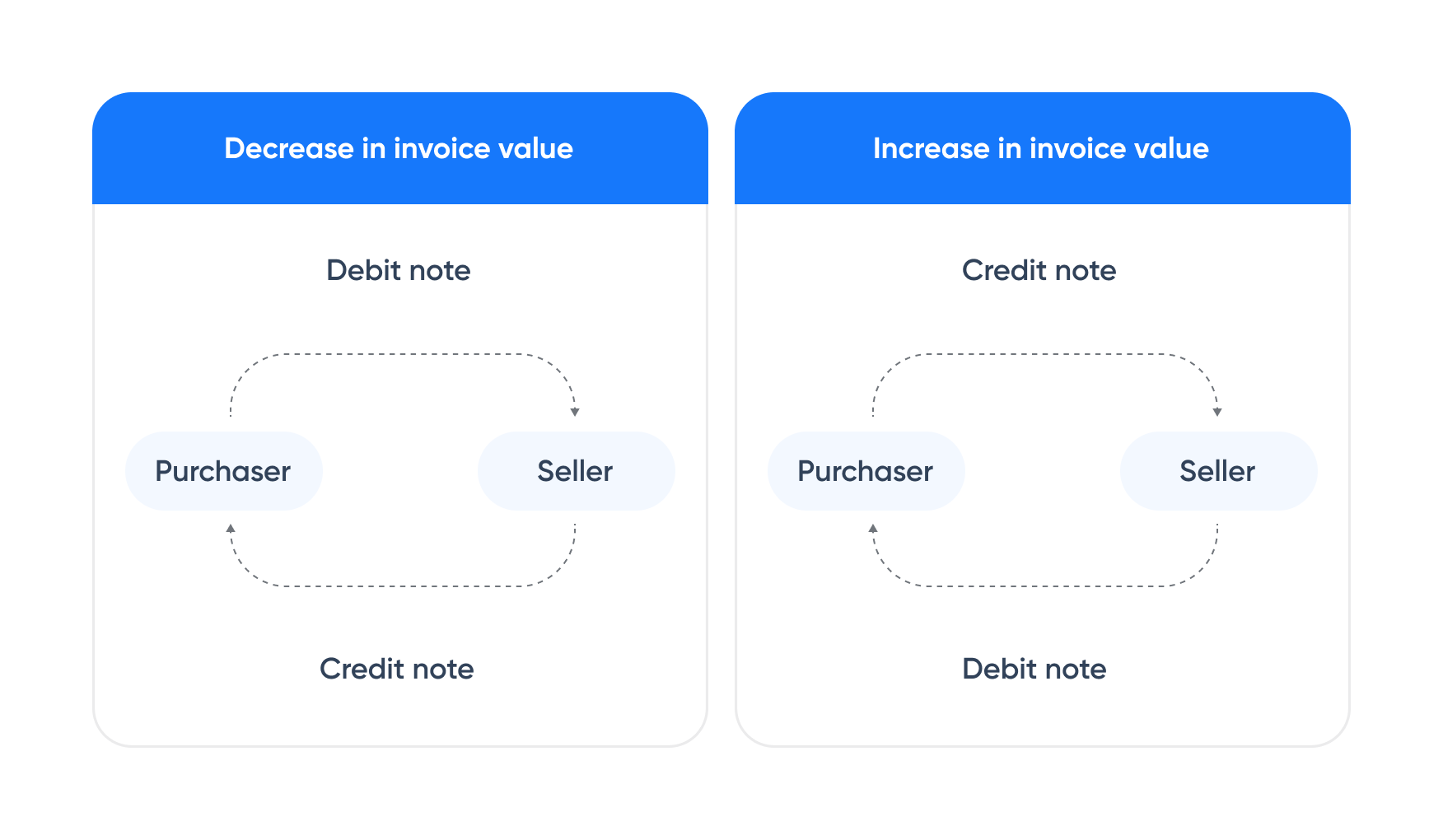
6. Debit Note
Issued when: Taxable value increases or Tax amount increases.
7. Credit Note
Issued when: Goods returned, Tax overcharged, or Service deficiency.
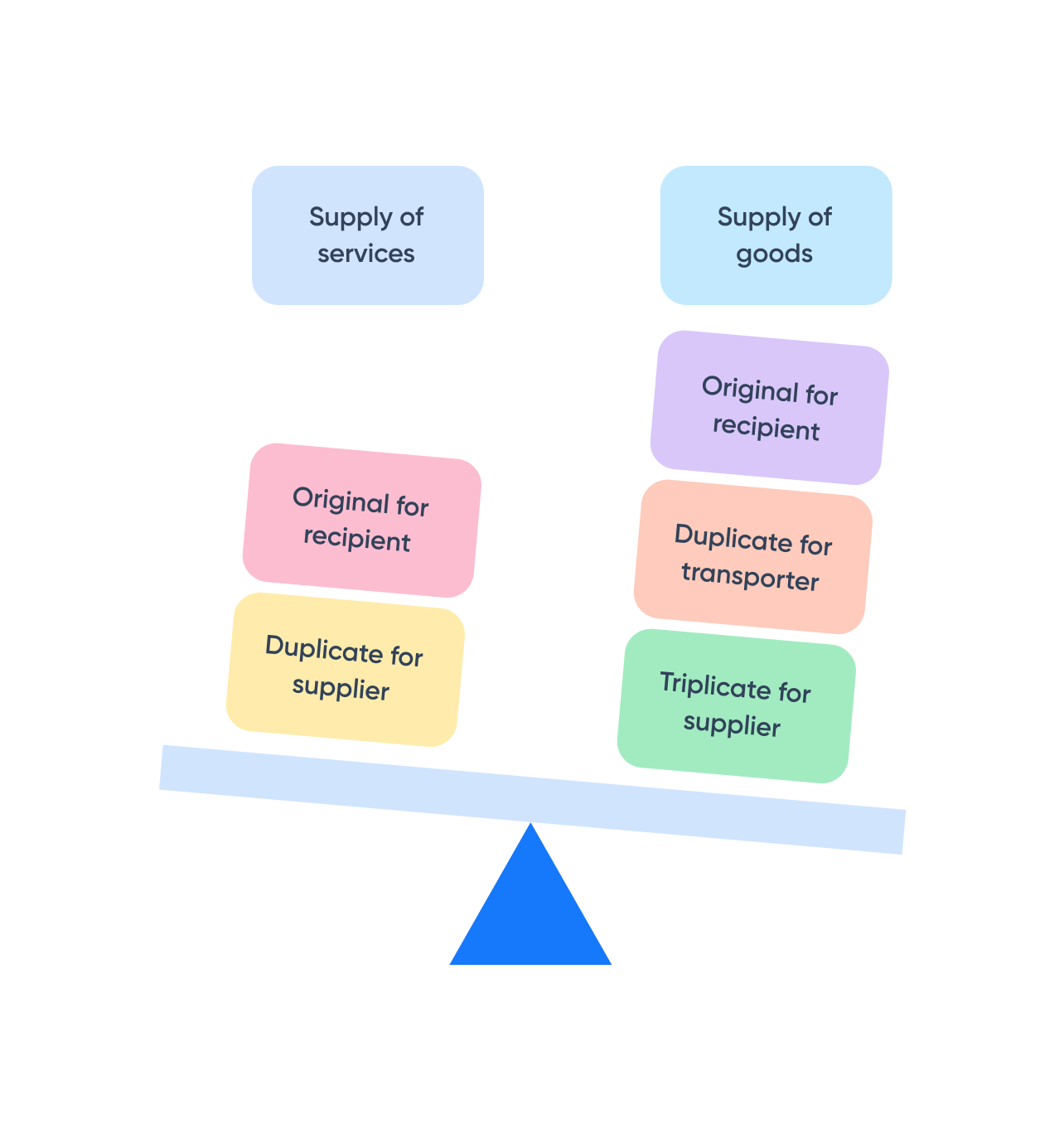
Number of Copies Required
| Supply Type | Copies |
|---|---|
| Goods | 3 copies |
| Services | 2 copies |
E-Invoicing (Latest Compliance Update)
For specified businesses: GST invoices must be generated through IRP (Invoice Registration Portal). Invoice gets IRN (Invoice Reference Number).
👉 Benefits: Reduces fraud, Auto-populates GST returns, Improves compliance.
Consequences of Non-Issuance of GST Invoice
🚨 1. Penalty Under GST Law
₹10,000 OR tax amount involved (whichever is higher)
🚨 2. Denial of Input Tax Credit (ITC)
Buyer cannot claim ITC without valid invoice. Leads to disputes and business loss.
🚨 3. Tax Evasion Charges
Considered non-compliance or suppression of turnover. May trigger audits or investigation.
🚨 4. Interest Liability
Interest charged on unpaid/short-paid tax.
🚨 5. Business Credibility Loss
Vendors & clients may stop dealing. Affects long-term business reputation.
Common Mistakes to Avoid
- Missing GSTIN or invoice number
- Wrong HSN/SAC code
- Incorrect tax calculation
- Not mentioning place of supply
- Ignoring reverse charge cases
Special Cases in GST Invoicing
✔ Banking & Insurance: Relaxed invoice format allowed
✔ Transport Services: Simplified documentation
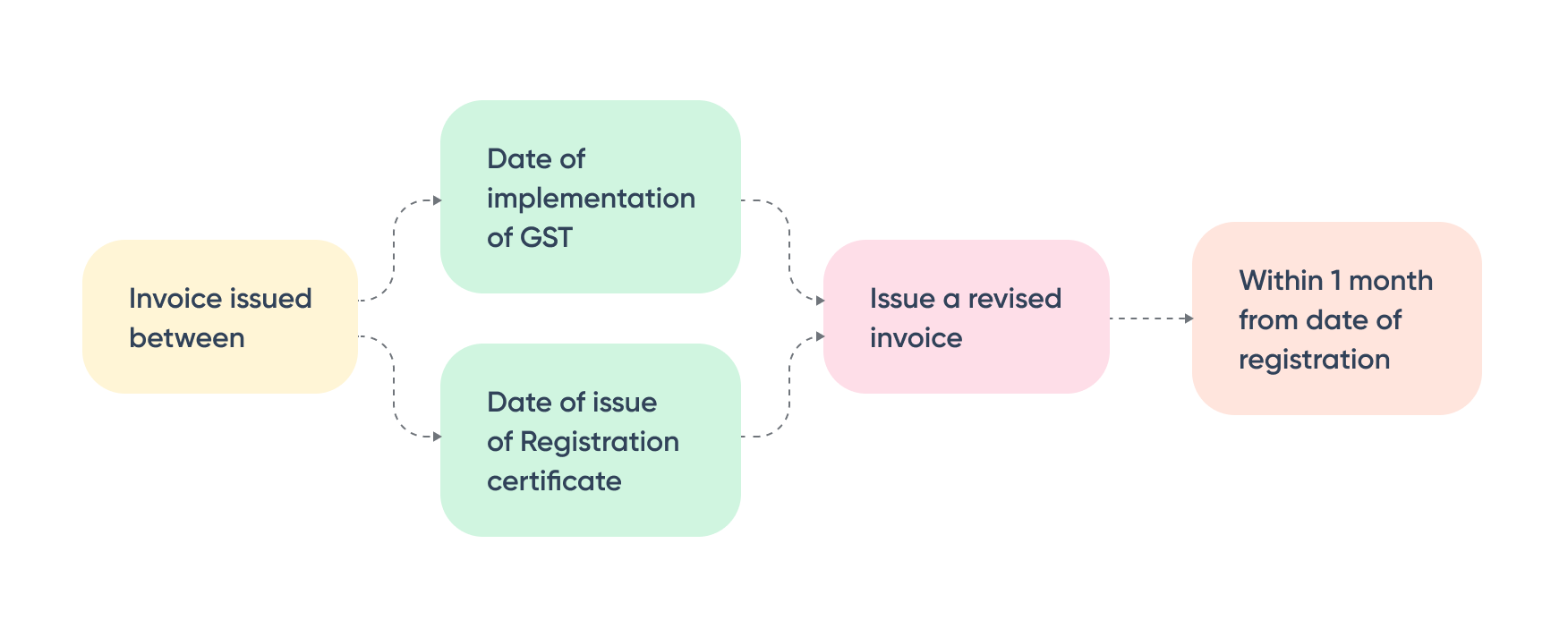
✔ Revised Invoices: Must be issued within 1 month of GST registration
Expert Tips (Advanced Insights)
👉 These are practical strategies most blogs don’t tell you:
- Use GST software for automation
- Always match invoices with GSTR-1 & GSTR-3B
- Maintain invoice sequence without gaps
- Track vendor invoices via GSTR-2B
- Keep digital + physical backups
GST Invoice vs E-Invoice
| Feature | GST Invoice | E-Invoice |
|---|---|---|
| Nature | Regular invoice | Digitally authenticated |
| Required for | All businesses | Selected turnover businesses |
| Validation | Manual | GST portal (IRP) |
Conclusion
A GST invoice is the backbone of GST compliance. It ensures: Legal compliance, Accurate tax reporting, and Smooth ITC flow. Failing to issue or issuing incorrect invoices can result in penalties, ITC loss, and legal trouble.
👉 Therefore, businesses must focus on: Correct format, Timely issuance, and Proper reconciliation.
FAQs
1. Is GST invoice mandatory?
Yes, for all taxable supplies by registered businesses.
2. Can GST invoice be revised?
No, but credit/debit notes can be issued for correction.
3. What happens if invoice is not issued?
Penalty + ITC denial + legal action.
4. Can I digitally sign GST invoice?
Yes, DSC is allowed.
Contact Us Now
Expert support for your business needs
Call Us
+91 9131754753
Mon - Sat, 10:00 AM - 7:00 PM